
Paying for your project

What you'll owe is in your written quote — the full price for your installation, up front, however you pay. Here's how people pay for it.

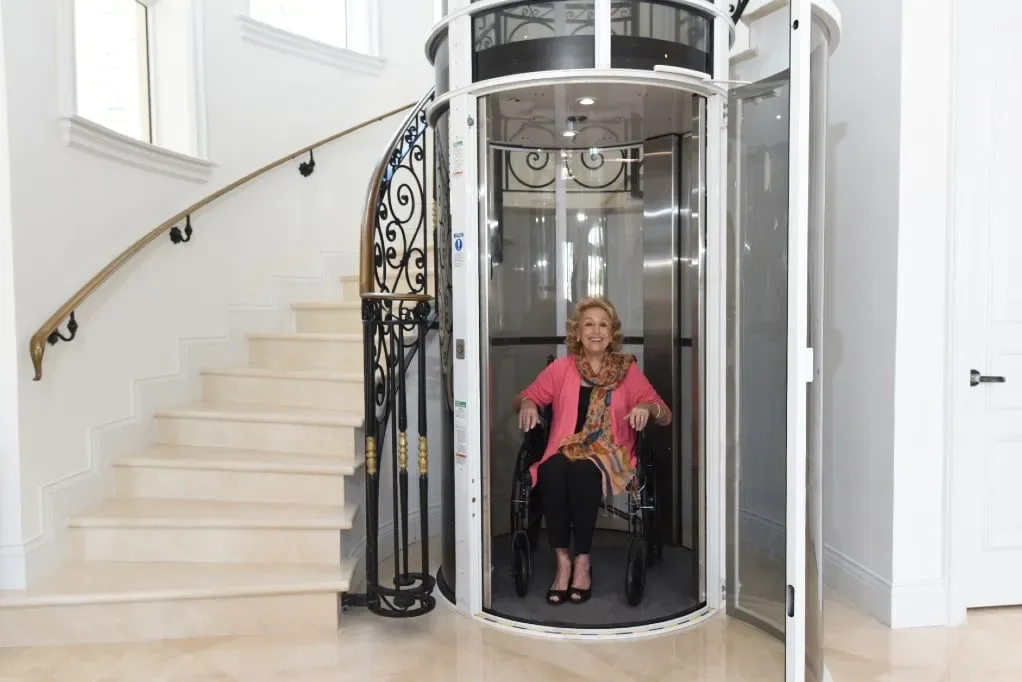
PVE52 pneumatic vacuum home elevator with a woman in a wheelchair inside the round glass cab
PVE52 vacuum elevator

Your bank or credit union

If you plan to borrow, it's worth asking your own bank or credit union first. You may qualify for better terms with a lender who knows you. Take your written quote with you, so they can see the full price for your installation.

Financing

If you'd rather spread the cost out than pay it all at once, financing is available through Mobility Trust. Ask us and we'll point you to it; the terms are between you and the lender.

Help paying for a home elevator or lift

There are programs that help some people pay for home access — veterans' benefits, state waivers, aging-services programs, and nonprofit grants. Which ones apply depends on your situation. We can help you find the ones that may fit and how to approach them. The particular program will determine those that qualify and what they will cover — you don't have to figure this out on your own.

Last checked: 24 September 2026. Programs change their rules, phone numbers and funding during the year. Check with the program itself before you rely on anything here.

Download the guide (PDF)
The PDF is on its way to your inbox — if you don't see it, check your spam or junk folder.
Something went wrong and the form didn't send. Please try again, or call us at 985-497-1675.
Get a quote

Before you start

A few things hold true for almost every program.

  • Ask before you buy. Most programs pay only for work they approve in advance. If you sign a contract or pay for work before approval, the program may not reimburse you.
  • Expect paperwork. Many programs ask for a doctor's note or prescription, proof of where you live, and a written, itemized estimate for the work.
  • Some programs choose the contractor. Some pay only contractors or suppliers enrolled with them. The program will tell you how its providers are chosen.
  • Waiting lists are common. Many programs fund work as money allows, so it's worth asking early.

Veterans' benefits

The U.S. Department of Veterans Affairs has several separate benefits for home access. Each has its own rules and its own application.

Specially Adapted Housing, Special Home Adaptation and Temporary Residence Adaptation grants

What it is:

Generally for:

Veterans and service members with certain service-connected disabilities. Temporary Residence Adaptation applies when the Veteran is living for a time in a family member's home.

May cover:

changes to the home, such as the ramps and wider doorways VA gives as examples.

How to start:

apply at VA.gov, or on VA Form 26-4555 by mail or at a VA regional office. VA's line for these grants is 877-827-3702 (TTY 711).

federal

Home Improvements and Structural Alterations (HISA)

What it is:

Generally for:

Veterans and service members whose VA care team finds the change medically necessary.

May cover:

changes such as permanent ramping, entrance and exit access, and bathroom access. VA's rules exclude "removable equipment or appliances such as portable ramps; porch lifts, and stair glides."

How to start:

talk to your VA care team. The application goes through your local VA Prosthetic and Sensory Aids Service. Have a VA physician's prescription, VA Form 10-0103, a written itemized estimate, and a photo of the area to be changed.

federal

Equipment prescribed through VA health care

What it is:

VA's Prosthetic and Sensory Aids Service provides equipment a Veteran's VA clinician prescribes, including items that improve accessibility at home.

Generally for:

May cover:

How to start:

ask your VA care team whether a lift or other equipment is right for you. VA arranges any assessment.

federal

Veteran Readiness and Employment: Independent Living

What it is:

a VA program for Veterans whose service-connected disability limits daily living. Its counselors can evaluate eligibility for a home adaptation grant as part of a rehabilitation plan.

Generally for:

May cover:

How to start:

apply for Veteran Readiness and Employment on VA.gov, then work with your counselor.

federal

Help filing a claim

What it is:

Generally for:

May cover:

How to start:

Louisiana: the Louisiana Department of Veterans Affairs has veterans service offices in parishes across the state — vetaffairs.la.gov/locations or (225) 219-5000.

Alabama: the Alabama Department of Veterans Affairs has veterans service offices in counties across the state — va.alabama.gov/service-officer or 334-242-5077.

federal

Aid and Attendance and Housebound benefits are monthly payments added to a VA pension for those who qualify. They are payments to you, not a home-modification grant.

Louisiana Medicaid waivers

Medicaid "waivers" pay for services that help people live at home instead of in a facility. Some include home changes, which Louisiana calls environmental accessibility adaptations. You have to be enrolled in the waiver first, and most waivers have a waiting list, called a request for services registry.

Community Choices Waiver

What it is:

Generally for:

older adults and people with adult-onset disabilities who would otherwise need nursing-facility care, and who are eligible for Medicaid.

May cover:

in the Louisiana Department of Health's words, "home modifications such as ramps, widened doorways, grab bars, roll-in shower, etc." An assessor looks at the home and the Department's regional office reviews the plan before any work.

How to start:

call Louisiana Options in Long-Term Care at 1-877-456-1146 (TTY 711).

louisiana

Waivers for people with intellectual or developmental disabilities

What it is:

Generally for:

people with intellectual or developmental disabilities, including autism. Age ranges vary by waiver.

May cover:

the New Opportunities, Residential Options and Children's Choice waivers include environmental accessibility adaptations — physical changes to the home, such as ramps, wider doorways and bathroom changes, that support health, safety or independence. The Supports Waiver does not.

How to start:

contact your parish's local governing entity (its human services district or authority) to be screened and placed on the request for services registry. The state office's line is 225-342-0095, or 1-866-783-5553.

louisiana

Traumatic Brain and Spinal Cord Injury Trust Fund

What it is:

Generally for:

Louisianans with a traumatic brain or spinal cord injury. It pays only after other sources, such as Medicare and Medicaid, have been used. It is a state fund, not a Medicaid waiver.

May cover:

among other services, "environmental accessibility modifications," assistive technology, and durable medical equipment.

How to start:

call 1-888-891-9441. Services are provided in the order people apply.

louisiana

Alabama Medicaid waivers

Alabama's waivers are run for Alabama Medicaid by several state agencies. Which agency you contact depends on the waiver.

Elderly and Disabled Waiver and Alabama Community Transition Waiver

What it is:

Generally for:

older adults and people with disabilities who would otherwise need nursing-facility care, and who meet Medicaid's financial and medical criteria. The Community Transition Waiver helps people move home from a nursing facility.

May cover:

both include home modifications. In the Elderly and Disabled Waiver's description, these may include "the installation of ramps and grab-bars and/or the widening of doorways." The waiver's rules exclude some construction, including changes that add square footage or affect the home's structure.

How to start:

call your local Area Agency on Aging and Aging and Disability Resource Center at 1-800-AGE-LINE (1-800-243-5463).

alabama

SAIL Waiver (State of Alabama Independent Living)

What it is:

Generally for:

adults with a physical disability who need nursing-facility level of care and meet Medicaid's financial criteria.

May cover:

environmental modifications, and evaluation for and provision of prescribed assistive technology.

How to start:

call SAIL at 1-844-602-SAIL (7245), or contact an Alabama Department of Rehabilitation Services office.

alabama

Intellectual Disabilities Waiver, Living at Home Waiver and Community Waiver Program

What it is:

Generally for:

people with intellectual disabilities.

May cover:

the Intellectual Disabilities and Living at Home waivers include environmental accessibility adaptations. Services are authorized only for an assessed need.

How to start:

call the Alabama Department of Mental Health's call center at 1-800-361-4491. Applications that are approved go on a waiting list.

alabama

Vocational rehabilitation

Vocational rehabilitation programs help people with disabilities prepare for, find, or keep a job. Services are tied to a written employment plan agreed with a counselor, so this route fits best when home access affects your ability to work.

Louisiana Rehabilitation Services

What it is:

Generally for:

May cover:

services under your employment plan, which can include "rehabilitation technology, including assistive technology services, assistive technology devices, and rehabilitation engineering."

How to start:

contact the nearest Louisiana Rehabilitation Services regional office (directory at laworks.net). For independent-living services, contact your regional Center for Independent Living.

louisiana

Alabama Department of Rehabilitation Services

What it is:

Generally for:

May cover:

assistive technology and equipment needed for your employment goal. Its rehabilitation technology specialists can also do a home accessibility survey with recommendations.

How to start:

contact your local office; the state office is on (334) 293-7500. A counselor must approve any purchase in advance, and some services ask you to share the cost on a sliding scale.

alabama

Assistive-technology loans

Each state has a federally funded assistive-technology program with financing options for equipment and, in some cases, home changes. These are loans or leases, which means they are repaid.

LATAN — Louisiana Assistive Technology Access Network

What it is:

Louisiana's statewide assistive-technology program. Its financing options include a lease program, a revolving loan fund and a financial loan program; for home modifications, LATAN points people to the financial loan program.

Generally for:

May cover:

How to start:

call LATAN's Baton Rouge office at 225-925-9500 or email info@latan.org.

louisiana

Alabama — the Ability Loan Program

What it is:

a loan program run by the Southern Disability Foundation with the Alabama Department of Rehabilitation Services' assistive-technology program. Its list of covered items includes power lifts, wheelchair ramps and home modifications.

Generally for:

Alabama residents with a disability, or a family member applying on their behalf. Applicants need to show they can repay the loan.

May cover:

How to start:

call the Southern Disability Foundation at 334-759-0918. For help choosing equipment, call the Department's assistive-technology program at (800) 782-7656. Have a description of the equipment and an estimate of its cost.

alabama

USDA rural home repair (Section 504)

What it is:

USDA Rural Development's Single Family Housing Repair Loans and Grants. Loans help homeowners repair or improve their homes; grants are for older homeowners.

Generally for:

lower-income homeowners who live in the home, in an eligible rural area, and who cannot get affordable credit elsewhere.

May cover:

under USDA's rules, grants can be used to remove health and safety hazards or to make a home "accessible and useable for household members with disabilities." Loans and grants can also cover special design features or equipment needed because of a physical disability.

How to start:

contact your local USDA Rural Development office (rd.usda.gov). Applications are accepted year-round, approvals depend on funding available in your area, and whether your address is eligible can be checked on USDA's eligibility site.

federal

Aging services and Area Agencies on Aging

Area Agencies on Aging are the local front door for older adults' services, funded in part by the federal Older Americans Act. What each agency offers depends on its area and its funding.

Louisiana

What it is:

the Governor's Office of Elderly Affairs works through local Area Agencies on Aging and councils on aging. Services in the network can include home repair and modification, described as "accessible modifications and minor repairs, e.g. handrails, ramps." Not every agency offers it.

Generally for:

May cover:

How to start:

find your parish's agency in the Office's directory at goea.louisiana.gov, or call (225) 342-7100.

louisiana

Alabama

What it is:

the Alabama Department of Senior Services works through Area Agencies on Aging, each with an Aging and Disability Resource Center that screens people for programs and services.

Generally for:

May cover:

How to start:

call 1-800-AGE-LINE (1-800-243-5463).

alabama

Anywhere in the country, the Eldercare Locator at 1-800-677-1116 can connect you with your local agency.

Nonprofit and disease-specific help

Rebuilding Together

What it is:

a national nonprofit network whose local affiliates make repairs and safety and accessibility changes for homeowners in need. There are affiliates in parts of Louisiana and Alabama, and each sets its own service area and rules.

Generally for:

May cover:

How to start:

find your nearest affiliate at rebuildingtogether.org.

federal

Organizations for specific conditions

Most of these organizations don't pay for home changes directly. They can help with equipment, home assessments, or finding financial help.

ALS Association: care services teams in Louisiana (225-343-9880) and Alabama (205-637-7833) offer equipment loans, home assessments and care coordination.

federal

National Multiple Sclerosis Society: MS Navigators help people find financial resources, including home modification financing. 1-800-344-4867.

federal

Muscular Dystrophy Association: a durable medical equipment grant program for people with a neuromuscular disease MDA covers. Ask the MDA Resource Center whether your item qualifies: 1-833-275-6321.

federal

Christopher & Dana Reeve Foundation: the Foundation doesn't give grants to individuals, but its information specialists help people living with paralysis find financial assistance. 1-800-539-7309.

federal

Insurance and settlements

Medicare and health insurance

Medicare generally does not pay for home elevators, stairlifts or home modifications; its equipment rules list home elevators and stairway elevators as not covered. The exception is narrow: Medicare Part B may cover some patient lifts a doctor prescribes as durable medical equipment, through a Medicare-enrolled supplier. Whether a particular lift qualifies is the supplier's and Medicare's call, so ask before you count on it. Other health insurance plans set their own rules, so ask your plan.

federal

Long-term care insurance

Some long-term care policies include a benefit for home modifications or equipment, often as a rider or an "alternate plan of care" benefit. Read your policy's outline of coverage, or call your insurer before work begins.

federal

Workers' compensation and injury settlements

If a work injury caused the need, ask the workers' compensation insurer, through your adjuster or your attorney, whether the change can be part of your medical benefits. In Alabama, the Workers' Compensation Ombudsman offers dispute help at 1-800-528-5166. If someone else is responsible for an injury, for example in a car accident, your attorney can advise whether future home-access costs belong in the claim.

federal

Taxes

The IRS treats some home changes made mainly for medical care as medical expenses. IRS Publication 502 lists examples, including entrance ramps, modified stairways, and "porch lifts and other forms of lifts." Where a change adds value to the home, only part of its cost counts, and the IRS notes that elevators generally add value to a house. Only reasonable costs count. Whether and how this applies to you depends on your whole tax picture, so ask a tax professional.

How we help

  • We help you work out which programs may fit and how to approach them, based on what you tell us about your situation.
  • We'll give you a written quote, with the full price for your installation, which you can take to a program that asks for one.

The decisions belong to each program. We can't say whether you qualify or what a program will pay.

Get a written quote and we'll talk through the ways to pay for it.

You'll get a written quote — then it's your call. No pushy follow-up.